
Learn why custom vs standard replacement windows cost differently, how Arizona home styles affect pricing, and which option fits your budget and openings.
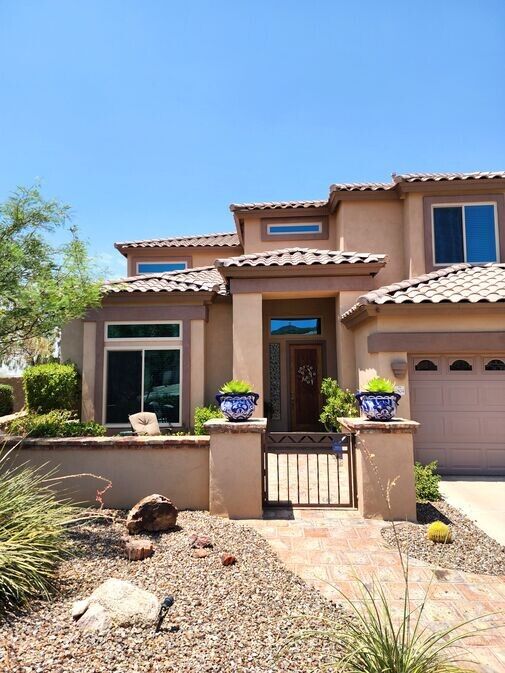
If you've gotten quotes from a few window companies and noticed the prices don't line up at all for what looks like the same project, you're not imagining things. The gap usually comes down to one factor: whether the window being priced is a standard size pulled from a manufacturer's catalog or a custom size built specifically for your opening. Understanding custom vs standard replacement windows cost differences before you start comparing bids will save you a lot of confusion and a few uncomfortable surprises.
We install windows across Arizona in homes built in nearly every decade since the 1950s, and the standard-versus-custom question comes up on almost every job. Here's how we walk homeowners through it.
Standard windows are manufactured in fixed, common dimensions that window makers produce in bulk ahead of time. Because they're built in volume before anyone orders them, the manufacturing cost per unit is lower, and they're often available faster since they don't have to be built to order.
Custom windows are the opposite. They're measured and manufactured for one specific opening, which means extra steps in design, fabrication, and quality checks before the window ever reaches your home. Those extra steps are where the added cost comes from, not some arbitrary markup for the word "custom."
There's no flat percentage or dollar figure that applies across the board. A custom-sized single hung window that's only slightly off from a standard dimension might cost just a bit more than its off-the-shelf counterpart. A large arched or geometric window built for a historic home with upgraded glass is a completely different project, and the price reflects that.
The real cost factors are size, shape, glass package, hardware, grilles, and how much labor the installation itself requires. Two windows that are both labeled "custom" can land at very different price points depending on how unusual the opening is.
Arizona's housing stock isn't uniform, and that matters a lot here. We regularly run into openings that simply won't accept a standard window without modification.
Homes built before manufacturers standardized common window dimensions often have openings that don't match anything on a current size chart. Ranch-style and territorial homes from the 1950s through the 1970s are common examples across Phoenix and Tucson neighborhoods.
If a room was added on or reconfigured at some point, the window openings were often built to fit the space rather than a manufacturer's spec sheet. These openings almost always call for a custom-built window.
Arched windows, circle tops, triangles, and other decorative shapes are never standard. Each one has to be manufactured for its exact geometry, which is why we point homeowners toward our geometric window options for unusual openings early in the planning process rather than after a standard quote has already been priced out and doesn't fit.
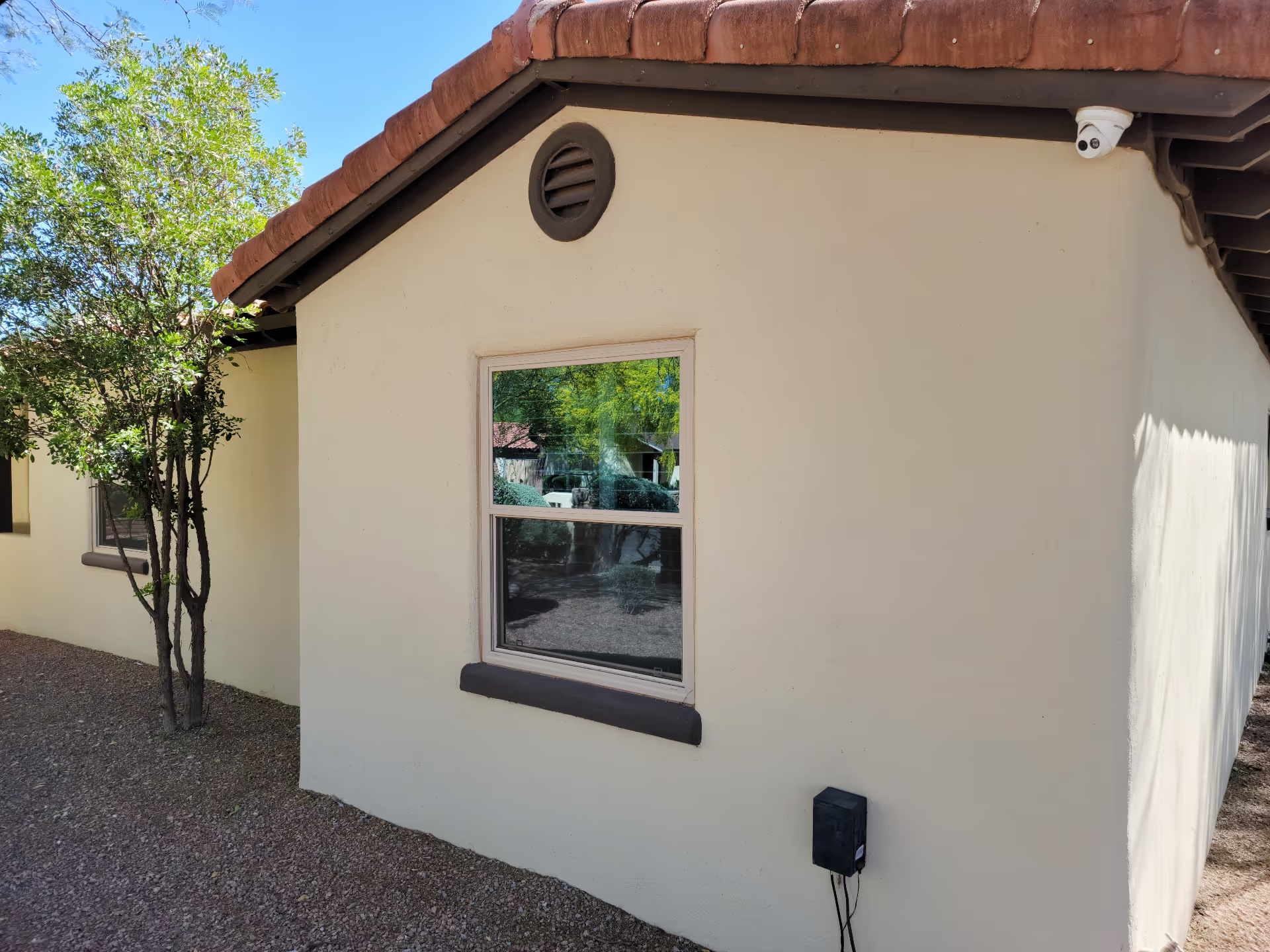
Not every home needs custom windows, and plenty of Arizona properties, particularly newer production-built homes, have openings built to common dimensions from the start. If your openings match standard sizes, a single hung window, sliding window, or picture window off the standard product line will usually cost less and arrive faster than a custom order.
If you're working with a tight budget and your openings are standard, there's no reason to pay for custom manufacturing you don't need. The key is confirming the fit before assuming either way.
This is where a lot of homeowners get tripped up. A standard window can sometimes be installed into a slightly different opening by packing it out, trimming it in, or modifying the framing around it. That's not the same as the window being built for that opening, and it can introduce problems down the road, from gaps that affect energy efficiency to water intrusion during monsoon season.
Modifying an opening to accept a standard size also adds labor, materials, and sometimes stucco or framing repair, which narrows or erases the savings you thought you were getting. Before committing to that route, it's worth reviewing proper window replacement techniques and considerations so you know what a correctly fitted installation actually involves.
The only fair comparison is an apples-to-apples one. Ask for pricing based on the same window style, same glass package, same hardware, and the same installation scope, including removal of the old window and any necessary repairs to the opening.
This approach shows you what you're actually paying for customization, and whether that customization is solving a real problem with your opening or simply adding features you don't need.
It depends entirely on your home. If your openings are standard and your main goal is keeping costs down, standard windows make sense. If your home has an older or nonstandard opening, a specialty shape, or architectural details worth preserving, custom sizing is usually what actually protects your investment rather than creating an unnecessary expense.
Before deciding either way, it helps to understand the full range of styles, materials, and glass choices available, which is exactly why we put together our ultimate guide to choosing new windows for homeowners working through this decision.
We carry Andersen, Simonton, Anlin, International, and other brand lines in both standard and custom configurations, so we can measure your openings and tell you honestly which route fits your home and your budget. Whether you need straightforward single hung replacements or a custom geometric window for an older Arizona property, we handle the measuring, the ordering, and the installation from start to finish. Reach out to us to schedule a measurement and get pricing based on your actual openings, not a generic estimate.



.png)


