
Curious about soundproof windows in Arizona? We break down STC ratings and which window and glass options actually cut traffic and neighborhood noise.
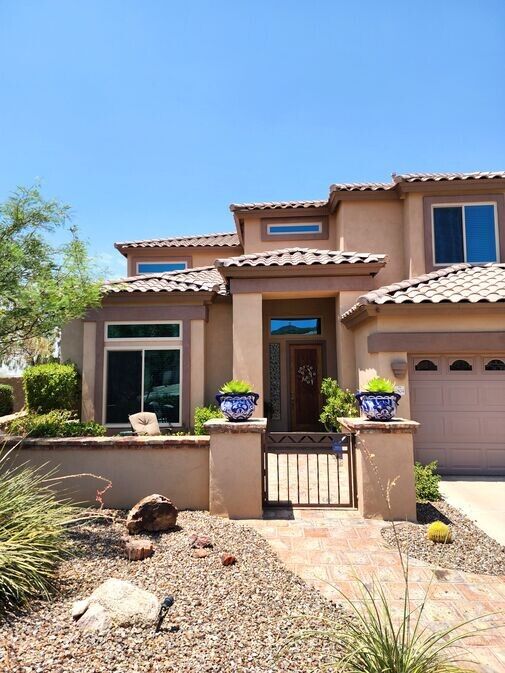
Living near a busy Arizona arterial road, a neighborhood with weekly landscaping crews, or a backyard that backs up to a community pool can make a quiet home feel out of reach. Many homeowners assume any new window will fix the problem, but noise reduction depends on specific details most people never get to see before they buy. We field questions about this often enough that we wanted to lay out what actually works and what doesn't.

Before talking about glass and ratings, it helps to know what we're usually solving for. The complaints tend to fall into a few categories:
Each of these has a slightly different fix, but they all come back to the same question: how much sound can the window itself stop before it reaches the inside of the house.
Sound travels through glass, frames, and the gaps around a window, not through the glass alone. A window's ability to reduce noise comes down to three things: the thickness and type of glass, the air space between panes, and how tightly the unit seals when closed. Old single-pane aluminum windows, still common in older Arizona homes, do almost nothing to block sound because they lack all three of those features.

Sound Transmission Class, or STC, is the rating system used to measure how well a window blocks airborne noise. The higher the number, the more sound the window stops before it reaches the inside of your home. The pros at Cardinal Glass Industries put together a clear explanation of sound transmission class ratings that homeowners often find useful when comparing products side by side.
Standard dual-pane windows typically land in the high 20s to low 30s on the STC scale, while windows built with laminated or acoustic glass can reach into the high 30s or low 40s. Every increase of roughly 10 STC points cuts perceived noise close to in half, so the jump from a builder-grade window to one designed for sound control is noticeable the first time you stand in the room with it closed.
Not every window style performs the same way, even with identical glass. Fixed windows generally outperform operable ones simply because they don't need the gaps, tracks, or hardware that allow a window to open.
Picture windows and geometric windows are sealed shut, which removes one of the biggest sources of sound leakage. If a room facing a busy street doesn't need ventilation, one of these styles paired with an upgraded glass package is often the quietest option we can offer.
Single hung windows and sliding windows, including 2-lite and 3-lite configurations, still perform well when they're properly installed and weatherstripped, but they won't match a fixed window's seal. Single slider windows fall into the same category. These styles make sense in bedrooms and living areas where airflow matters, and the noise reduction gain from better glass is still meaningful even if it's not quite as dramatic as a sealed unit.
The glass package matters more than almost any other factor in a window's noise performance.
Not every brand or product line handles acoustic upgrades the same way, which is part of why we carry more than one option. Our Andersen Windows sound-dampening options include glass packages designed for homeowners dealing with traffic or street noise, and they're worth a look if that's your main concern. Simonton Windows with acoustic glass offer another path for noise control without jumping to a fully custom build, and we can walk you through how the two lines compare for your home and budget.
Windows aren't the only entry point for outside noise. A poorly sealed entry door lets in nearly as much sound as an old single-pane window, so if you're upgrading windows for noise reasons it's worth looking at your doors at the same time, including Therma Tru doors and Titan Security doors with tighter seals and solid cores.
Even a well-rated window won't perform to its STC rating if it's installed with gaps around the frame or sits poorly in a stucco opening. We install to Arizona building code requirements on every job, which includes proper flashing, sealing, and fit, because a correctly installed standard window often outperforms a premium window that was installed poorly. Local experience matters here, since Arizona's stucco construction and temperature swings create fit issues that don't show up the same way in other states.
If outside noise is a daily frustration, we can walk you through window and door installation options built around sound control, along with the glass upgrades that make the biggest practical difference. We'll also cover care and maintenance guidance so your new windows keep performing the way they should for years. Reach out and tell us what's bothering you about the noise in your home, and we'll help you figure out which brand, style, and glass combination actually solves it.
Jamie Lopez


See our latest installs, watch helpful how-to videos and read what homeowners say about working with us.

.png)


